
Table of Contents
Introduction
Welcome to the world of digital art! As a digital artist, you know that creativity can sometimes hit a snag. Whether it’s a technical glitch or a creative block, finding a way forward is key to a smooth creative workflow. What if there was a problem-solving method designed specifically for creators like you? This guide will introduce you to “trobochut,” a unique approach to tackling challenges. Let’s explore how mastering this technique can transform your process and help you bring your digital art visions to life more effectively.
Understanding Trobochut and Its Connection to Problem-Solving
Have you ever felt stuck while working on your digital canvas? Trobochut is a problem-solving process that moves beyond technical fixes, encouraging a more creative and intuitive approach. It’s about understanding the entire context of an issue, not just fixing a symptom.
While related to troubleshooting, trobochut is especially useful for creative fields like digital painting. It helps you analyze problems from a different perspective, blending technical know-how with artistic intuition to find innovative solutions. Let’s look closer at what makes this method unique.
What Is Trobochut? Key Concepts and Origins
So, what exactly is trobochut? The term itself is a blend of “troubleshooting” and “chute,” suggesting a more guided and holistic path to resolving issues. Its origins lie in the need for a problem-solving process that accommodates the fluid and often unpredictable nature of creative work, such as digital art.
Unlike straightforward troubleshooting, which often follows a rigid, linear path, trobochut encourages you to think outside the box. It is a framework that values experimentation and understanding the root cause in a broader context. This makes it a powerful tool for artists who face challenges that aren’t just technical but also creative.
Essentially, trobochut is a mindset. It’s about approaching a problem with curiosity and an open mind, using a flexible process to find a solution that not only fixes the issue but also enhances the final creative output.
How Trobochut Differs from Traditional Troubleshooting
While both trobochut and traditional troubleshooting aim to solve problems, their approaches are fundamentally different. Traditional troubleshooting is typically systematic and methodical, focusing on identifying and eliminating known issues in a linear process. It’s about finding the one “right” answer to a technical problem.
In contrast, trobochut is more adaptive and intuitive. This process is less about following a strict checklist and more about understanding the creative context. It allows for exploration and accepts that in creative fields, there might be multiple valid solutions to a single problem. This makes it a better fit for the nuanced challenges faced by artists.
The comparison below highlights the main distinctions, showing why trobochut offers a fresh perspective beyond the traditional method.
| Feature | Trobochut | Traditional Troubleshooting |
|---|---|---|
| Approach | Holistic and intuitive | Linear and systematic |
| Focus | Understanding creative context and root cause | Identifying and fixing symptoms |
| Process | Flexible and adaptive | Rigid and step-by-step |
| Goal | Finding innovative and creative solutions | Finding a single, correct technical fix |
The Trobochut Approach in Creative Workflows
Integrating the trobochut approach into your creative workflow means shifting how you view challenges on your digital canvas. Instead of seeing a problem as a roadblock, you can treat it as an opportunity for innovation. This mindset is valuable whether you’re creating a fan art piece inspired by “The Rising of the Shield Hero” or designing a complex original scene.
This problem-solving processo helps you avoid the common top falls that can derail a project. By applying trobochut, you build resilience and develop a more dynamic way of working, turning potential frustrations into creative breakthroughs. Let’s examine how to apply this method to specific challenges and the steps involved.
Applying Trobochut for Digital Art Challenges
As a digital artist, you’ll inevitably encounter hurdles in your creative workflow. The trobochut process is especially useful in situations where standard solutions don’t apply. For instance, it can help when you’re struggling with color harmony in a complex digital art piece or when a particular brush isn’t producing the texture you envisioned.
This approach benefits a digital artist by encouraging them to step back and re-evaluate the entire project, not just the immediate issue. Are you creating an anime-style wallpaper and the lighting feels flat? Instead of just tweaking brightness levels, trobochut might prompt you to study lighting in similar works or experiment with unconventional color layers.
Here are some examples where trobochut is particularly effective:
- Creative Blocks: When you feel uninspired, trobochut helps you analyze why and explore new techniques or subjects.
- Compositional Issues: If a layout feels “off,” this process encourages you to deconstruct and rebuild it from a fresh perspective.
- Technical-Creative Mismatches: When your tools aren’t matching your vision, trobochut guides you to either adapt the tool or rethink your artistic goal.
Step-by-Step Guide to the Trobochut Process
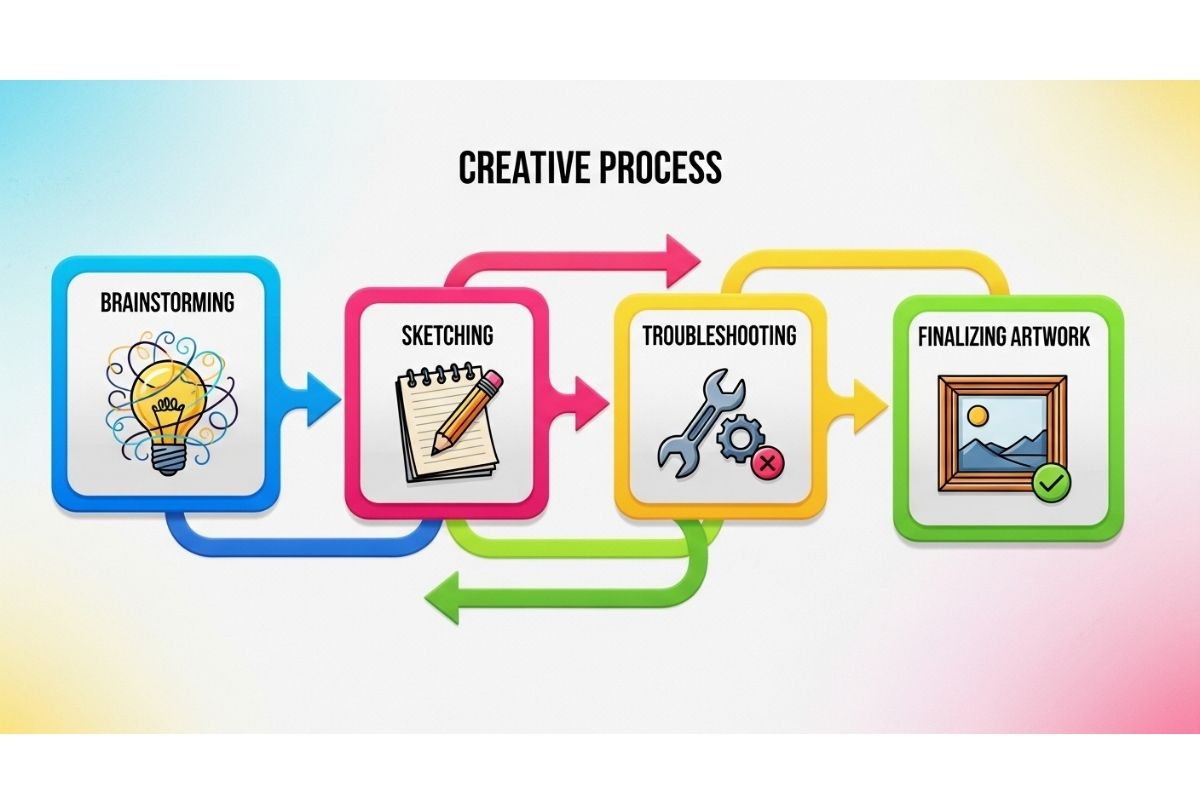
Ready to try the trobochut process for yourself? While it’s more flexible than traditional troubleshooting, it still follows a general structure. This step-by-step guide can help any digital artist apply this creative problem-solving method to their digital art projects.
The first step is always to define the problem from a holistic viewpoint. Instead of saying “my colors are wrong,” try framing it as “the mood I want to convey isn’t coming through in the color palette.” This small shift opens the door to more creative solutions beyond simple color correction.
From there, you can move through a cycle of exploration and implementation. Here’s a simple breakdown of the process:
- Define the Core Issue: Articulate the problem in terms of your creative goal, not just the technical symptom.
- Explore Possibilities: Brainstorm a wide range of potential solutions, no matter how unconventional.
- Experiment with a Solution: Choose one or two promising ideas and test them on a small scale.
- Analyze the Outcome: Did the experiment move you closer to your goal? If not, what did you learn?
- Refine and Repeat: Use your findings to refine your approach and try again, iterating until you find a solution that works.
Common Mistakes and How to Avoid Them When Using Trobochut
Even with a powerful method like trobochut, there are common mistakes and pitfalls that can hinder your progress. One of the biggest is treating it like a rigid, step-by-step formula. The true strength of this process lies in its flexibility, so trying to force it into a strict sequence defeats its purpose.
Another of the top falls is giving up too early. Creative problem-solving can take time, and not every experiment will be a success. Avoiding these common errors will help you get the most out of trobochut in your creative workflow. Below, we’ll identify these pitfalls more clearly and offer best practices for success.
Recognizing Pitfalls in Digital Creation
When using trobochut for your digital art, it’s easy to fall into a few common traps. A major pitfall is over-analyzing the problem to the point of paralysis. Instead of getting lost in thought, the goal is to move into action and experimentation.
Another mistake is failing to document your process. When you’re trying different solutions in your digital painting creation, it’s helpful to keep notes on what works and what doesn’t. This not only helps solve the current issue but also builds a knowledge base for future troubleshooting challenges.
To help you recognize these pitfalls before they derail your work, here are a few to watch out for:
- Sticking to One Idea: Don’t get fixated on a single potential solution. Be open to exploring multiple avenues.
- Ignoring Intuition: While analysis is part of the process, your creative intuition is a valuable guide.
- Fearing “Wasted” Time: Every experiment, even a failed one, provides useful information. See it as learning, not a waste.
- Skipping the Analysis Step: After an experiment, take a moment to reflect on the outcome before jumping to the next idea.
Best Practices for Consistent Results with Trobochut
To achieve consistent results with the trobochut process, adopting a few best practices can make a world of difference. The key is to approach it with a mindset of curiosity and patience. Every digital artist, whether creating a character reminiscent of Popeye or a complex scene, can benefit from a structured yet flexible approach.
A core best practice is to set aside dedicated time for problem-solving. When you hit a snag, step away from the pressure of finishing the piece and give yourself space to purely focus on the trobochut process. This helps you think more clearly and creatively without the stress of a deadline looming.
Here are some best practices to follow:
- Start Small: Test your ideas on a duplicate layer or a separate file to avoid making irreversible changes to your main artwork.
- Embrace “Happy Accidents”: Sometimes the best solutions come from unexpected outcomes. Stay open to these discoveries.
- Build a Reference Library: Collect images, tutorials, and notes that you can turn to when you’re stuck.
- Know When to Take a Break: If you’re feeling frustrated, stepping away can give you the fresh perspective needed to find a solution.
Benefits of Trobochut for Artists and Technical Creators
The benefits of adopting trobochut extend far beyond just fixing problems. For a digital artist, this approach fosters greater creativity and resilience. It turns frustrating roadblocks in digital art into opportunities for growth, helping you develop a unique artistic voice and a more robust workflow.
These advantages aren’t limited to artists. Technical creators, including those working in fields like cryptocurrency or software development, can also gain from this holistic method. It encourages innovative thinking that can lead to breakthroughs. Let’s explore these benefits in more detail.
Advantages Over Standard Troubleshooting Techniques
The advantages of trobochut become clear when you compare it to standard troubleshooting methods. While traditional techniques are effective for purely technical issues, they often fall short when a problem has a creative dimension. Trobochut fills this gap perfectly.
One of the primary advantages is its flexibility. The process is not a rigid script but a fluid framework, allowing you to adapt it to the specific needs of your project. This adaptability empowers you to find solutions that are not just functional but also creatively satisfying, which is something standard troubleshooting rarely addresses.
Here are some key advantages trobochut offers:
- Fosters Innovation: By encouraging exploration, it can lead to new techniques and styles you wouldn’t have discovered otherwise.
- Reduces Frustration: It reframes problems as creative challenges rather than frustrating obstacles, improving your mindset.
- Builds Versatile Skills: This method strengthens both your analytical and creative problem-solving abilities.
- Leads to Better Outcomes: Solutions found through this process are often more integrated and harmonious with the overall creative vision.
Real-Life Examples Where Trobochut Excels
Trobochut proves its worth in many real-life examples across the digital art landscape. Imagine you are commissioned to create a beautiful, or “cantik,” digital art wallpaper featuring powerful women. However, you find that your composition feels static and lacks energy. Standard troubleshooting might only suggest re-arranging elements.
With trobochut, you would step back and redefine the problem: “How can I convey a sense of dynamism and strength?” This might lead you to experiment with dramatic lighting, energetic brushstrokes, or a completely different color palette. The solution becomes about enhancing the theme, not just fixing the layout.
Here are other situations where trobochut excels:
- Developing a Unique Style: An artist uses trobochut to deconstruct their influences and experiment with new combinations to forge a personal style.
- Animating a Complex Motion: A motion graphics artist struggles with a character’s movement, using trobochut to study real-world physics and emotional expression to create a more believable animation.
- Translating a Concept to Visuals: When creating art based on abstract concepts, like the fluctuating value of pesos colombianos to dolares, trobochut helps brainstorm visual metaphors that effectively communicate the idea.
Conclusion
In conclusion, mastering Trobochut can significantly enhance your creative process as a digital artist or creator. By embracing this innovative approach, you can tackle challenges more effectively while avoiding common pitfalls associated with traditional troubleshooting methods. The application of Trobochut not only streamlines your workflow but also fosters an environment of problem-solving that encourages creativity and exploration. As you incorporate Trobochut into your artistic practices, you’ll find yourself equipped with the tools to navigate obstacles with confidence. If you’re ready to elevate your skills further, don’t hesitate to reach out for a free trial or consultation—let’s embark on this creative journey together!
Frequently Asked Questions
Is Trobochut Useful in IT and Technical Fields?
Absolutely. While this guide focuses on digital art, the core principles of trobochut are highly valuable in IT and other technical fields. Its holistic approach to troubleshooting can help engineers and developers find innovative solutions to complex system issues where standard, linear methods fail.
Where Can One Find Manuals or Guides for Trobochut?
Currently, there are no official manuals for trobochut, as it is more of an intuitive process than a rigid methodology. The best guides are articles and community discussions within creative and technical forums. This article serves as a foundational guide to understanding and applying the process in your digital art.
What Are Key Steps to Begin Mastering Trobochut?
To begin mastering trobochut, start by consciously reframing your problems from a creative perspective. Practice the core steps: define the issue holistically, brainstorm freely, experiment with small-scale tests, and analyze the outcomes. The more you apply this process to your digital art, the more natural it will become.
